L'articolo What is Shamanism? Who are Shamans? proviene da The Drum of the Shaman.
]]>It has neither laws nor temples: it rests its foundations only on the direct encounter with the Spirits, with the Journey into the Other Reality, an atavistic wisdom in which medicine, magic and mysticism are inextricably intertwined.
For shamans, illness and suffering are just paths in the forest, where we happen to get lost but from which it is also possible to go back – and the task of shamans is that of seekers of lost souls.
Their methods are so primordial and absolute that they are completely similar in every part of the world, in populations that have never come into contact with each other, such as the Indians of the Amazon River and the Australian Aborigines.
This site has been a meeting point for those who practice authentic shamanism in contemporary culture since 2000.
But it also wants to give those who know little or nothing about it the opportunity to access this ancient knowledge and have help for the recovery of personal power, healing and wisdom.
The writings are the result of the teaching of my masters both of this and the other reality. And everything has been experienced for a long time in my practice as a shaman and curandero (shamanic healer).
What is shamanism?
It is not a belief system or a philosophy or an interpretation of the world.
It is not even a religion, as we usually understand it.
It’s just the natural, spontaneous way of looking at reality, the one we still have as children before the dogmas of our culture repress it.
Shamanism is only what is before any belief system.
Who are shamans?
Shamans practice the ancient art of dealing with Spirits, personal entities that exist behind or beyond this Reality.
Shamans know how to travel in their Worlds and master them.
They manage to draw “a map of the forest” to help their community orient themselves along the mysterious and often harsh paths of life: illness, pain, lack of meaning, difficult choices, death.
They help their people to be in balance with the whole Universe, with the Powers of Nature, with the Spirits of animals, plants, with the Spirits of the Dead and those of the invisible Worlds.
How to contact me
To contact me, Tsunki, the most suitable way is to write an email to [email protected] or [email protected].
For urgent things or if you need to deal with something verbally, read the contact page, where you will also find telephone numbers.
L'articolo What is Shamanism? Who are Shamans? proviene da The Drum of the Shaman.
]]>L'articolo The Great Power of Arútam proviene da The Drum of the Shaman.
]]>In other words, they are the essence of those powerful beings and not the animal itself.
For example one of the arútams is the Jaguar, here we are not speaking about the Spirit of one Jaguar, but of the essence of the “jaguarness”. Therefore the power which is created and formed by every jaguar.
Such manifestations of Arútam are ancestral, emerging from the primeval ages and they have an enormous Power. Any force of Life can be traced back to the arútams. It’s difficult to tell how many arútams there are; below I will try anyways to give a list of the most common ones:
The soul of humans, according to Shuar people
Christianity has persuaded us that there is a unique and indivisible soul, which we receive before we are born. However all shamanic traditions have a different experience.
According to the Shuar, we have an “ordinary” soul, called nekás wakán (“true soul”) – that stays within us from the beginning of our life and through it we identify ourselves. There are also at least two other souls that might come into existence, only in some very significant moments of our life.
– One is called muísak wakán (wakán or wakáni means “soul, shadow, image”) and is a revenge soul. It comes into existence a few days after a violent death, if the person has been killed. This soul is thirsty for blood and seeks the one who killed him/her for a compensation. It wanders around or chases its killer until getting revenge.
This kind of revenge Spirit is known in all shamanic traditions. Muisaks are the restless Spirits haunting places where murders or massacres have occurred. They are no “complete” souls, they don’t remember anything but their death, are full of hate and pain, and share almost nothing with the dead person’s nature and his/her true soul.
– The second of the “acquired souls” is called arútma wakán, “soul of the arútam”.
It comes into existence, if it ever does, only during a powerful ritual. It has the Power of an Arútam and comes from one ancestor who had the same Power.
For example if we receive the Anaconda arútam, it means then one of our ancestors in one of his/her other lives was an anaconda and he/she used to have its Power.
How is an “Arútma wakán” acquired?
In the Shuar tradition the arútma wakáni makes the difference between miserable and meaningful lives.
It is created during a powerful ritual. In the moment when it is acquired, it immediately settles in our chest.
However it can get out of our body by its own will and travel to the Land of the Deads. It once belonged there, since it is an ancestor’s gift. From the Land of the Deads it will bring us back wisdom and strength from our kin, our ancestors and the mankind.
The Power of this soul is huge: the one who owns it cannot be killed nor can they die of an accident. He has a high resistance towards diseases, too. They will rarely be beaten by their enemies and will never be defeated.
Natives claim that those people may die only because of an epidemic disease, which means they may only get killed by a very severe and widespread disease.
Depending on which arútam gave birth to the additional soul, it will have a special Power with which we will realize our Dream. The Dream is the task that Spirits have assigned to us and that the arútam will reveal in a vision.
Whatever our Dream is, it is always a real objective, making us feel realized both spiritually and concretely. This is the only thing able to give us real fulfillment because the Sky has assigned it out of pure love for us.
For instance, the arútam of the Crocodile brings the Power to be a healer. This means that healing is our task/duty: arútam gives us the Power to heal, and healing is the only thing that will make us feel fulfilled.
The expressions “undertaking an arútam quest” or “ find our own arútam ” always refer to the arútam soul, which is the arútma wakáni.
Rituals to acquire it are partly secret, usually they take place near a waterfall or a river because water streams are boundaries of this Reality. They are boundaries also in the Other Reality, separating this World from the Land of the Deads.
Water leads us through the boundary between life and death; in fact we are born – same happens in afterlife too – by crossing water (i.e. amniotic liquid).
– You can walk for your arútam out into the jungle in a stormy night, because electric storms are a “catalyst” for the arútam soul.
– You may encounter your arútam during a shamanic initiation.
After a limpieza (shamanic cleansing) the shaman–teacher sings his/her anents (sacred chants), blows his/her Spirit helpers all over your body and into your “crown”, perhaps you drink an entheogen – such as ayahuasca or plain green tobacco juice – then you go to sleep and you may happen to dream your arútam.
– If the initiation fails, you need to fast 2 days, then a Uwishín (Shuar shaman) walks you out to a waterfall or a river where you have to stay 1 or 2 days, still fasting, drinking a bit of green tobacco juice (if you feel like it), chanting thousand years old anents the Shaman will teach you and invoking your ancestors.
If they decide so, the arútam will appear in a dream.
Special people may get 2 arútam souls in 2 different rituals (never both of them in a single one). People like that can’t die of epidemics either: in few words nothing can kill them.
Two-arútam men or women are called kakáram, which means “powerful people”.
The emergence of the arútam
When you wander near a river in the jungle, in the moon and lightning shine, the arútam will often appear in a fearful form. However if you have the courage to touch it with a hand, a feet or with the palo mágico, a sacred stick the shaman gave you, the arútma wakán will come to existence at that very time. Before the arutam soul merges with you in your chest, it’ll tell you your dream, what the Ancestors have decided for your life and the arutam will give you the power to do.
You’ll see the arutam just for a few minutes while listening to the dream. After that time the new soul may only appear to bring you some special message in a dream, never in a conscious vision nor in meditation.
There is also a method to evoke our own arutam in case of need and get it to come in a dream.
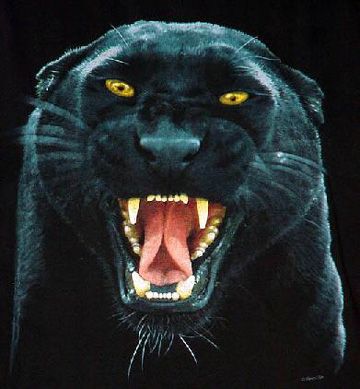
If you win the arútma wakán in an initiation rite or other ceremony, its emergence may be frightful anyway. The arutam will bring you power, good luck and courage, yet you are supposed to pick up a little bit of courage to win it!
Before the arútam comes on, a strong wind will rise.
Then the emergence of the arutam soul gives off an amount of energy which materializes in a special weather event, like a lightning or strong rainy wind. At our latitudes a sudden snowfall may occur too.
The uwishín who accompanies the arutam seeker, is usually aware that the quest was successful even before talking to the seeker: because at night a lightning fell near the camp or wind blew very strong.
However the energy release isn’t always violent,in few cases it occurs gently and condenses in a rainbow the next morning.
These effects on weather always occur, even when the arútam quest takes place in Europe, as my students and I have been verifying in the past 3 years.
The arútams
Most of arutams are essential powers of Amazonian animals.
Even when the quest is done elsewhere, in the woods rather than rainforest, animals from Europe or from other places have never occurred to date.
Here is a list of the commonest arutams:
Panther (Black Jaguar)
Jaguar
Cougar
Tigrillo or Ocelot (small spotted cats)
Anaconda
Cayman
Tortoise
Eagle
Condor
Hawk
Toucan
Hummingbird
Owl
Guacamayo or Azulejo (red, yellow and azure big parrots)
Anteater
Bear
Lightning
Fireball or falling star
Tree
Waterfall
the Rainforest
the Sun
the Fire
Rock
Rainbow
Shuar ancestor, an arutam having a human form
Nunkui, Shuar name for Grandmother Earth. She looks like an old woman or a little girl.
Tuwa: an evil Spirit, appearing like a pig or a wild hog. It’s the only negative arutam who predicts a disgraceful life.
The detailed powers of these and more arutams are the topic of some workshops I hold in Switzerland
L'articolo The Great Power of Arútam proviene da The Drum of the Shaman.
]]>L'articolo The River of Life, the Kidneys and the Wall proviene da The Drum of the Shaman.
]]>There are mysterious things that happen to souls.
Many years ago I treated a young man of around 35 years of age who had never had any luck and, frankly, had in my opinion made little effort in life, abandoning the most promising undertakings halfway through or at the first disappointment. Instead, he often insisted on paths with no prospects and which gave him very little satisfaction.
No shamanic treatment had given results, but – perhaps because being treated by me gave him only some small, miserable satisfaction! he-he insisted on coming to see me.
One evening my Pasuk (Spirit Helpers) led me into a dark bedroom, full of drapery. The plaster was chipped on the wall behind the bed. Looking closely there was an irregular hole in the wall, which looked like a bird’s nest. Inside there was not a bird but a boy, white as he had never seen the light of the sun, with delicate and moist skin, as if he had just emerged from the womb. However, he looked between 20 and 30 years old, even if in miniature. By letting him out of the hole he took on a normal size, but he tended to stay crouched because he didn’t seem used to walking.
I didn’t understand what I was in front of. He looked like a lost soul, and from his face and hair, he must have been my patient. But with the Conibo shamans, I had learned that the soul that leaves the body due to a susto (“fright”, the most common and classic cause of soul loss) exits time and stops growing, whether it is a child or a boy, or at least to grow old. In other words, if a shaman hunts for the soul that was lost when the patient was 7 years old, the soul will appear like a 7 year old child and will also have the awareness of being 7 years old, because for him time has stopped.
Here, however, it was different, the soul seemed to have lived – probably a prisoner – in the hole in the wall for a long time, since early childhood, but it had grown as a child would have grown if kept segregated for the same amount of time.
I then discovered that an elderly woman was sleeping in the bedroom and bringing food to the boy segregated in the hole in the wall.
I didn’t know what to do. But since I had to do something, I followed the instructions of one of my Pasuk, took the boy away from his mother, purified him in a sacred waterfall and brought him back to the patient, blowing it into his ear. I then made an offering that was needed and guided the patient to take a lustral bath with special herbs.
When I returned to the Amazon I tried to understand what I had encountered. I asked Abuelo Jua, my teacher, who told me: “It looks like a Cofan curse.” It seems like a curse from the Cofan, a population of Colombia. “You have to ask a Cofan shaman. The Cofans,” he told me, “have tséntsaks who steal souls and feed them like pigs or chickens.”
For what purpose? I asked.
“To make them grow and become fat, like with pigs, the fatter the better.”
And then… they slaughter them?
The abuelo laughed. “No – he replied – it’s more like with cows …” The abuelo was ‘rich’ and had a cow that looked after Rosa, one of his daughters. “If they are fat they give a lot of milk, they drink the milk.”
Those who used this curse drew energy or power from the soul they raised… The boy who lived in the wall, however, was certainly not fat, he appeared frail and barely able to move – the elderly woman who fed him kept him on a stick.
The abuelo didn’t tell me more and told me again to go to the Cofans.
The River of Life
Some time later, speaking with an old Cofan shaman, he told me: “It’s a kidney disease.”
My patient had never had any kidney problems, but he had suffered from impotence, or erectile dysfunction, as it is called today, since he was young. And every shaman knows that sexual potency in men, as well as fertility in women, depend on the Power of the Kidneys (a curious thing is that the kidneys have nothing to do with a woman’s ability to enjoy sex and have orgasms), but with fecundity, while in men a low or bad renal power affects sexual enjoyment, given that it causes impotence, and also the fertility of the semen).
The shaman Cofan told me that there is a river in the kidneys, but it is difficult to see it. The river carries the Power of Life through the kidneys, from there tributaries go e.g. to the sexual organs, but the main river rises up to the chest, up to the Heart.
If the River is dry or has little water, the Heart will also be dry and you will not know how to love or create a territory with which to feed and make your family happy.
However, I didn’t understand what this had to do with the diaphanous soul held in a hole in the wall…
“Often – the shaman told me – someone has built a wall or a dam and the river cannot pass or little water passes and even the Spirits and people cannot enter and exit from there. The child is held back by the wall.” He understood man since he was a child, that is, his soul.
But who is holding him back? I asked.
“They keep him there to protect him”.
“Often, in these cases, – the shaman told me – someone has built a wall or a dam and the river cannot pass or little water passes and even the Spirits and people cannot enter and exit from there. The child is held back by the wall.” He meant the man [the patient] since he was a child, in other words, his soul.
But who is holding him back? I asked.
“They keep him there to protect him. They are afraid that he will be hurt because he is small and defenseless and because his father has so many enemies. His ancestors. They do it before he is born and everyone inherits this wall, they are born with the wall.”
Ancestors is a very flexible term in the language of Amazonian shamans: sometimes they are ancient ancestral ancestors of all the people, other times your great-grandparents or great-great-grandparents, sometimes people who in past or recent times are linked to you with a red thread created by sex : therefore your parents, grandparents etc., but also brothers, but also step-siblings of your grandparents or even women with whom your great-grandfather had sex, without them being your relatives in any way. All it takes is a sexual connection.
I believe my patient’s wall was built by his mother. The elderly woman I had seen looked like her mother, or at least the patient recognized her when I described her to him. And even the room with the draperies was the same as his mother’s bedroom.
“When the ancestors have done this – said the shaman – you must free the prisoner. They look after him and feed him, but they steal his life force.”
And how do you free it?
“You must find the wall. The wall that the ancestors build is always there even in the Middle World. There is always a wall that is real, not just a vision!” There is always a wall in this reality, the wall materializes in a real place, usually part of the patient’s life.
Move away from the Wall and the Jailer
When I returned to Italy, I discovered that my patient had not had much benefit from the curanderia (shamanic healing).
I realized that even though the soul had been freed from the wall and brought back to him, it continued to return to its mother to be nourished. And that the mother sucked the Vital Power from her (the soul), like a farmer milks a cow.
When the mother (or another ancestor, even dead!) sucks the Power from him, she partially dries up the River of Life. Therefore, throughout his life the patient had had low vital power, inability to create a territory and inability to truly love.
I later told the patient that he needed to physically distance himself from his mother. He didn’t live at her house, but he lived in the same city. Just as the Wall materializes in this reality, the distance from the wall must also materialize here.
The Spirits and Fortune offered the patient the opportunity to move far away from home.
Spirits later showed me that a distance of at least 500 km from the Wall is needed, so that the soul does not return to its jailer anyway.
I had to bring the soul back again, which did not return in the hole, but it was near the Wall and it was difficult to convince it, which I could only do with a stratagem taught to me by the Abuelo and which I cannot recount here.
But once the soul was freed and the patient had gone to live very far from the wall (over 700 km in his case), his situation slowly improved. A year later he found a decent job and a girlfriend and within about another three years he managed to create a good territory, which in another two years became excellent. The last time I heard from him he was a happy and even successful person in something he loved very much.
Healing times are long and requires trust and patience.
The curanderia between the two Realities
Many curanderos who practice shamanic methods or even other spiritual healers believe that just doing something in the Other Reality is enough to change the material problem. This is a serious mistake.
The method only works when the disease is not serious and has yet materialized only in a disorder, e.g. a functional disorder of an organ (such as poor digestion, having migratory pain in a knee…). However, when the disease materializes in an organic disease (a tumor, rheumatoid arthritis, hepatic steatosis…) or even in a functional disorder which however has persisted for many years and is therefore deeply rooted either in a situation of bad luck or chronic failure, the cure must act in both Realities.
One misleading thing is our language: shamans, shamanic practitioners or curanderos educated in the West distinguish the soul from the body and when they say “soul” they think of it as something distinct from the body and the concrete, material life of the person.
The Cofan shaman I had spoken to never said “soul.” He said that the child had been imprisoned in the wall and that he had been nurtured until he became a weak and cowardly adult who always remained in the same prison and took food, in exchange giving Life Power, to his captor.
The child who had badly grown into an adult had to be taken away from the wall.
It is no coincidence that the wall also exists in this Reality and even in this Reality man (not just an abstract “soul”) must be moved away from the Wall otherwise he will return, as he is used to, near the Wall to have food.
If the man moves far away from the Wall in this Reality then he will free himself from imprisonment and the flow of the River will be able to increase without being drained by the jailer.
A question that could be asked: what happens if he only physically distances himself without doing any shamanic intervention?
Usually it is an eventuality that does not come true: if the person is not saved from the wall in the Other Reality, he cannot escape in this one either.
When he succeeds, it doesn’t last, he actually continues to maintain distant contact with the jailer, which allows the jailer to continue to feed him and drain his vital power. So he fails to succeed and usually, after some time, he will also physically return to the fold or – as I will explain in the circles on these topics – will bond with a replacement jailer.
In the circle in which we will address the Soul of the Kidneys, we will see better how it works and why it happens like this.
Finding the River
The abduction of the soul at birth or – in other cases – in childhood and its segregation in a Wall or behind a Wall is not a rare event, but not a very frequent one either.
However, even if the soul remains free, the Wall has often been built anyway. Sometimes, instead of a wall, it is a Dam, often created by animals, usually Beavers. The Dam creates different problems than the Wall and we will not discuss them in this article.
In both cases, however, the River is usually blocked in part or completely and the water is held back to be given to the Jailer or, if the soul has not been kidnapped, the water still remains beyond the Wall and cannot nourish the sexual organs, the chest and the Heart.
In my courses for future curanderos I have never discussed the Wall and the Dam, much less this type of soul abduction.
The reason is that it is extremely difficult to locate the Wall and also to see the River correctly and follow its course. Sometimes it happens – and it has occasionally happened to some of my students or apprentices – to see the Wall or more often the Dam, but even in these cases they are unable to go up the main River (or perhaps some tributary) or confuse it with other flows of Power of the body. Partial and imprecise vision in shamanism usually results in only temporary healing or… no healing at all.
In fact, many times my students who have come across the Wall or the Dam, following their own shamanic instinct and the advice of the auxiliary Spirits, have destroyed the Wall and Dam and made the water flow out, but – by visiting the patient again after some time – in the majority of cases the barrier had been restored or had been replaced by something similar, which always blocked the waters.
In fact, it is not usually possible to heal the disease of the Wall without a complete vision of the Power of the Kidneys and the River and the areas that it passes through.
Only in recent times has Tsunki, the Spirit of the Water People, taught me a very special and unusual technique for locating and following the River of Life when examining the patient’s kidneys and abdomen – an area called the shag – and to see the Wall, if this is present. The method also allows us to discover who built the Wall, a very important step in understanding the origin of the problem and freeing the patient from it. In fact, I don’t always have my beginner’s luck, that I saw an elderly woman bringing food to the soul and the woman was immediately recognized by the patient as her mother!
These methods have been thought for the first time in the Circle on the Souls of Organs (25 -26 October 2014) where Tsunki showed many secrets about the River of Life, its Powers and how it can be strengthened or healed, and what the Wall and the Dam, how to definitively dismantle them and how to help the healing of the patient, who will often have to do things in this Reality, both by carrying out rituals (e.g. purifications or baths) and by acting on his own life: on this sometimes small but important steps that require a modest effort are enough, other times – as in the case of a kidnapped soul – it is necessary to move away from the Jailer and from the Wall itself.
L'articolo The River of Life, the Kidneys and the Wall proviene da The Drum of the Shaman.
]]>L'articolo Tséntsak and Spirit Helpers proviene da The Drum of the Shaman.
]]>What is told here is quite incomplete and I recommend everybody not to use this material for a “do-it-yourself” apprenticeship. Shamanic training needs a shaman teacher and this would be still true even if the article were quite comprehensive. Shamanism cannot be learned by reading.
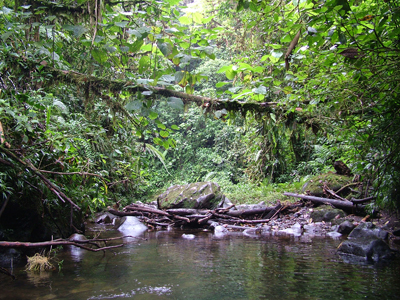
In the Western Amazon rainforest (Peru and Ecuador) the shaman-to-be spends a lot of time in the Jungle being taught by the Plant Spirits. The phrase “being taught” is often misunderstood by Westerners and most of people thinks that it’s about gaining knowledge, e.g. on the true nature of the Universe, on the art of shamanizing or on healing with plants.
Actually in the shamanic view gaining knowledge is never distinguished from gaining Power.
Conversely, the power you get always brings (or should bring) an increase in knowledge, which allows you to properly handle the power itself.
This merge of power and knowledge is the true shamanic education and makes up what natives refer to as the shaman’s sabiduría (knowledge, wisdom).
More exactly, however, in the early times of their training the shamans-to-be acquire some Powers along with few, poor instructions for their use and no information at all on what they actually are.
Later on they will get more detailed instructions on the Powers that they’ve been acquiring – but there are still some secrets they can’t understand. Only in the last period, when they have been trained for a long time, spirits of great strength and wisdom finally will appear and give them the true, full shamanic wisdom.
It’s the contrary of the Western educational approach, which first deepens theory before gradually moving to practice.
Tséntsaks or virotes
At the beginning, the shaman-to-be must travel to the Aquatic Worlds, origin of the power of water, which makes the plants grow and thrive in the jungle.
Water evaporates out of rivers and oceans to the clouds, then comes back down in rain which makes the plants grow.
All that is ruled by Aquatic World (a.k.a. Underwater World) Powers where the apprentice is supposed to descend. Aquatic Spirits can also be met with at night on a river bank, when the power of water is strongest, e.g. during a thunderstorm.
Among the Shuar and Achuar, the Lord of the Aquatic World is called Tsunki, originally meaning “a healer”, because he also rules health and cure.
Tsunki is closely related to the Anaconda and in fact the Shipibo-Conibo, living in the Southernmost Amazon jungle, call him “the Giant Anaconda”.
Tsunki or some other water spirit teach the apprentice an ancient and complex procedure to acquire the strong powers of the jungle plants.
Such powers are “spirit essences” of the plants, their souls in a way, which the Shipibo-Conibo call yoshín.
Even if they are a sort of Spirits, the apprentice can just use them and won’t be able to communicate with them for long time yet. They are like a “fluid” not only flowing in plants, but in several natural phenomena. When walking in the jungle, you can sense their power, as a Conibo shaman tells:
“You sense the yoshín in the smell of the earth, in the hot vapors rising from rotten plants and trees after a heavy rain or resting on the ground at night, like a mist.
Here they come, you sense them and they are the yoshín spreading around restlessly and splashing here and there…”
The yoshín, whether from plants or other natural phenomena, mostly appear like bugs, reptiles and fish (but also like jaguars, crocodiles, dolphins and rocks …), like “inanimate” beings, at times even like tools made by men such as knives, scissors and barbed wires.
That’s because their power is similar to what they look like. It’s not always easy to understand the relationship between the plant we know and its yoshíns, because this reality often differs from the other reality.
Some yoshíns are shields or weapons of defense and are used for protection, others are more aggressive and are used for attacking – when needed – or to cause and cure diseases.
When the shaman acquires them, they begin to live in his/her body, as they previously lived in the plant.
The Shuar and Achuar usually call them tséntsak, a term literally meaning the blowpipe thin bamboo darts.
Besides yoshín – which roughly means “invisible spirits” – the Shipibo-Conibo also call them virotes, meaning “darts” again.
The reason is that, when used as weapons or sent away on a mission, they change into small darts the shaman blows out of his/her mouth.
The tséntsak spirits are invisible (or only visible in a trance state), but whenever the shaman takes the full power of them, they’ll become as strong as to materialize!
Powers of Tséntsaks
In reality tséntsaks or yoshíns are partly materialized, or rather they are on the border between material and immaterial worlds.
Many Shamans view them as material entities, but very small – and therefore usually invisible – ones.
Yet when their energy rises, they emit a white or colored glow, which can be seen in half-darkness and sometimes even in daylight. You can see them as dots or filaments or bright small “worms”. When entering a trance, a shaman can even see their true form (i.e. insect, snake etc), which is probably too small to be seen in ordinary conditions.
Their energy rises when they get excited or, as shamans say, they “wake up”.
Because they are half-material, they must be fed with tsank, a green wild tobacco growing in the Jungle – the shaman makes a cold brew of tsank and inhale or drink it. Another possible food is ayahuasca, an entheogenic (psychoactive) plant, whose decoction has been used all over the Amazon rainforest.
When fed, the tsentsak awake. But they can also wake up for other reasons: because of sensing a threat to their master (the shaman) or of having to give him a vision about something.
The powers of tséntsaks are many and manifold. Each has its own powers, e.g. to travel far away and see what happens in other places or the power to cut, like the tijera (scissors) tséntsak, which can be used to cut a sticky relationship, or the power to bring good luck and even the power to make someone fall in love as the músap tséntsak does.
Other tséntsaks, as already mentioned, act as a shield to protect from danger, as well as from a harmful influence.
Tséntsaks also have collective powers, like of having visions, or of seeing into the client’s body “as if it were made of glass” (a sort of X-ray sight) and finding out disorders and diseases.
Some of the most important powers are those related to diseases, many tséntsaks, when shot at an enemy and plunged into their body, cause illness and sometimes death.
While using this evil power is only justifiable in time of war, to protect our own community, it’s of importance to emphasize that every tséntsak is able to cure the same illnesses it can cause!
They are therefore widely used in the curandería (healing way), and are the main shamanic tools.
The Pásuk or “people of the plants”
Until they master them, shamans-to-be are not able to communicate with their tséntsaks very well, not much better than with a swarm of bees.
Still worse, they’d know none of their powers, if some of them weren’t already known in the tradition that the shaman teacher teaches during the day, before the student at nightfall goes back into the deep jungle.
However, after long months of training, one night tséntsaks will suddenly change into human beings, men, women, elders and children parading in front of the apprentice and explaining them further powers of each tséntsak.
The apprentice will be able to communicate with these beings, just like with a person of flesh and bones, and they will teach him/her the secret powers of plants night after night.
They look like humans of all ages, except some looking like animals or mixed creatures, and they are called pásuk by the Shuar and Achuar, while the Shipibo-Conibo call them jonibo, which just means “people” i.e. human-looking beings.
Some of them may be as powerful as to become visible out of trance and to materialize into real people or animals.
The shaman-to-be discovers in practice – not just in theory – that the pásuk are hidden “inside” or “behind” the tséntsaks he’s owned for long and has partly learned to master.
The pásuk, as he will learn, are spirits dwelling in trees, in the top as well as in roots, and making up a flow of spirits, called by the Shipibo-Conibo the “gente – jonibo – de la planta” (people of the plant).
In each plant the jonibo are numerous and even organized according to a social system.
We need to emphasize that – contrary to what a Westerner would believe – there isn’t a single Spirit for each single plant.
This is what is told in New Age neo-shamanic workshops because it meets the Westerners’ expectations.
In the true reality instead, every single plant is inhabited by a flow of Spirits, many different immaterial beings, the jonibo, who have their own social organization.
Actually you may meet with a true town of Spirits inside the plant.
A town where the shaman-to-be goes and gets wisdom and power.
The yoshín or tséntsak are sometimes perceived by the apprentice as the powerful scent emanating from the jonibo or – as some shamans say – as the jonibo‘s “tools” or “weapons” – in a word, the People of the Plant’s powers.
Just as people in every village have at their disposal a lot of weapons and tools, each plant has an amount of these powers.
However these are but images to depict the Other Reality – very different from this one – as something familiar.
L'articolo Tséntsak and Spirit Helpers proviene da The Drum of the Shaman.
]]>L'articolo Vicente Júa (c. 1900 – September 1st, 2006) proviene da The Drum of the Shaman.
]]>He spent most of his life, during the first 70 – 75 years – when Shuar lived free in the north-west Amazon rainforest (Ecuador) – hunting wild animals and fighting territorial wars against Achuar people, historic enemies.
Starting from 1975 the real westernisation began: Shuar, Achuar and other native people were deprived of their territories, given to settler farmers (who wanted a piece of land to grow crops) and cattlemen.
The natives were assigned territories of their own land and were forced to stop the tribal wars.
Since then the Shuar, like the other people, needed to send their children to school: the kids had to study in order to defend their people in the future at national and international level – as many Shuar born in those years are now doing.
Vicente Júa, at a very old age, lived the transition from the ancient way of living to the westernisation.
He had 5 wives, about 50 children and 150 nephews. Having many wives (most of Shuar people have 2) is a prestigious sign, since it requires many resources and great effort: it means that many people brought him gifts for the help he gave as Uwishín.
Illiterate, he spoke a poor Spanish and our conversations were a mix of Spanish and Shuar language.
Like many shamans of the Amazon, for a long time he was the leader of his community. When he left the command of his tribe, he retired with 3 of his wives (still alive) and some of his youngest children in an isolated house in the jungle, near the village of Pomona (Morona-Santiago region, Ecuador).
Despite he didn’t live any more with his community, he would continuously be visited by sick or suffering people who did come not only from the jungle, but from the entire Ecuador.
His reputation grew so much that he started to receive patients from Peru and even United States.
I was his apprentice for about 10 years, and he gave me the task to spread the shamanic knowledge in the West because the young Shuars don’t want any more to sacrifice themselves to become Shamans and “prefer to watch a movie instead of the visions of the Spirits”.
In Summer 2004 he told me that he was close to the end of his life and decided to transfer all his shamanic Powers before they became too weak – as it happens to very old Shamans.
His son Domingo later told one of my apprentices that his father didn’t give this gift to anybody else.
In 2005 he moved with his youngest wife to Santa Rosa (Macas) near his son Domingo’s house.
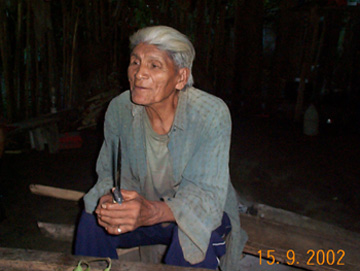
In August 2006 he told me he was about to “transform into his arútam” (i.e. to die). I never saw him again – alive. On September the 1st of the same year he reunited with the Ancestors.
The night after, before I was informed of his death, he appeared to me in the form of his arútam and guaranteed his help and support for my task.
Now I am happy that he is constantly in contact with me, as Master Spirit.
L'articolo Vicente Júa (c. 1900 – September 1st, 2006) proviene da The Drum of the Shaman.
]]>